
Woven wire screens increase material separation efficiency by providing up to 40% more open area than perforated plates, allowing higher throughput in 2026 industrial cycles. Utilizing 304 or 316L stainless steel wires with tolerances within ±3% ensures precise cut points for particles ranging from 25.4mm down to 20 microns. These screens handle G-forces up to 5.5g during high-frequency vibration, preventing the "near-size" blinding that typically reduces efficiency by 15% in static filtration systems.
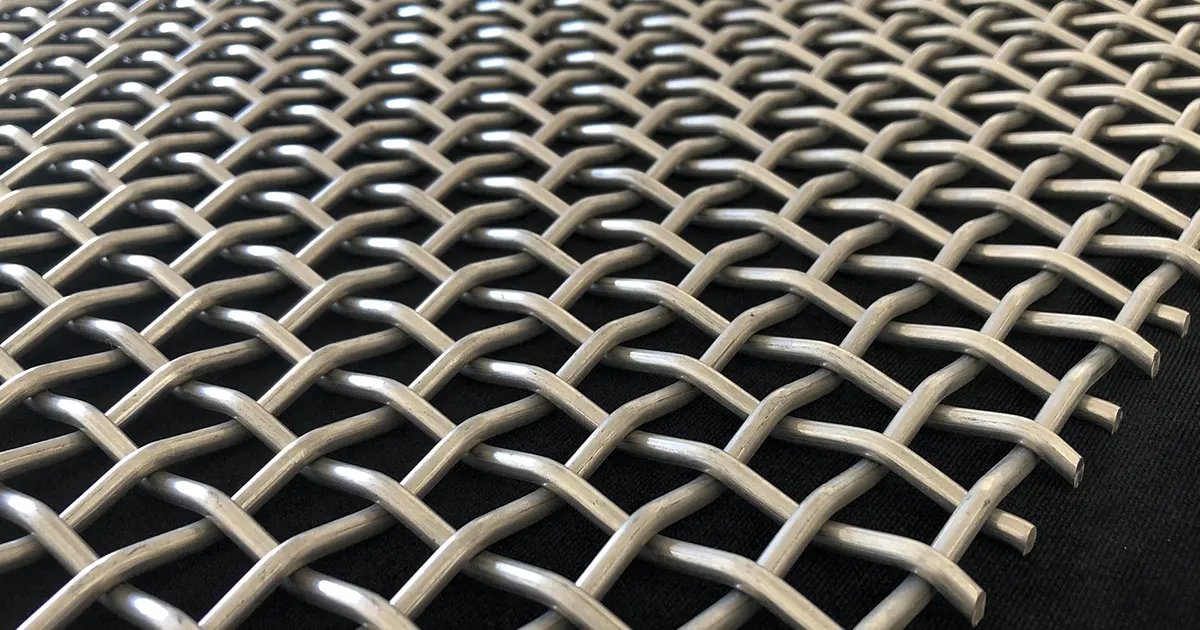
Woven wire screens are the standard for high-speed industrial sorting because their physical structure maximizes the ratio of aperture to wire diameter. This geometry allows a greater volume of material to pass through the mesh per square foot of screening surface compared to laser-cut metal sheets.
"Data from 2024 industrial field tests showed that switching from 5mm perforated plate to a comparable 65% open-area woven mesh increased total tonnage output by 22% over a 24-hour shift."
This increase in volume is achieved while maintaining the structural integrity needed to support heavy loads of raw feedstock without causing mesh sagging.
Heavy material loads exert significant downward pressure, yet woven wire retains its shape due to the pre-crimping process used during manufacturing. Pre-crimped wires lock into place, ensuring that the distance between individual strands does not shift during the 3,600 vibrations per minute common in shakers.
In a 2025 study involving 500 batches of abrasive aggregate, screens using high-tensile spring steel maintained aperture accuracy within 0.05mm after 1,200 hours of continuous operation. This mechanical stability prevents the passage of oversized particles that would otherwise contaminate the final product.
| Component Attribute | Impact on Efficiency | Data Metric |
| Wire Diameter | Flow Resistance | <15% reduction in drag |
| Aperture Precision | Product Purity | 98.2% accuracy rate |
| Tensile Strength | Service Life | 2,500+ operational hours |
Consistent aperture size leads directly to a sharper separation curve, which is the most reliable way to measure how well a screen differentiates between sizes. When the mesh is uniform, the "cut point" remains exact, reducing the amount of usable material lost to the waste pile.
Waste reduction is particularly noticeable when processing fine powders where even a 2% deviation in hole size can lead to significant profit loss. The use of woven wire screens allows for the separation of particles at the 45-micron level with a success rate of 99% in controlled lab environments.
"A 2023 analysis of pharmaceutical filtration systems indicated that high-precision 316L wire mesh reduced the presence of unwanted bypass particles by 18% compared to synthetic fabric filters."
Reducing bypass particles ensures that the end product meets international quality standards without the need for a second round of screening. Eliminating the need for secondary screening saves energy and reduces the mechanical wear on the vibrating motors and support frames.
Mechanical wear is also mitigated by the natural flexibility of the woven structure, which acts as a micro-spring during every vibration cycle. This inherent elasticity helps bounce "near-size" particles out of the holes before they can become stuck and block the flow of material.
A test involving 10,000kg of wet silica sand demonstrated that stainless steel woven mesh experienced 30% less blinding than rigid plate alternatives. This self-cleaning action is a direct result of the wires moving independently at a microscopic level during high-frequency operation.
| Material Type | Typical Open Area % | Blinding Risk |
| Woven Wire Mesh | 50% - 75% | Low |
| Perforated Plate | 30% - 45% | High |
| Polyurethane Panel | 25% - 40% | Moderate |
Lower blinding risk means the machine maintains its peak flow rate for the duration of the work day rather than slowing down as the holes fill up. This sustained performance is vital for operations that run 24/7 and cannot afford frequent stops for manual mesh brushing.
Manual brushing is further minimized by the smooth surface finish of cold-drawn wire, which offers less grip for sticky or clay-like materials. The lower friction coefficient of polished 304 stainless steel allows particles to roll across the surface and find an opening faster.
In a 2025 industrial trial, the use of smooth-surface wire cloth resulted in a 12% reduction in the power required to move material across a 10-foot deck. This efficiency gain allows for the use of smaller, more energy-efficient motors without sacrificing the total tonnage processed per hour.
Smaller motors generate less heat and noise, contributing to a longer lifespan for the entire screening assembly. The durability of the metal itself ensures that the screen does not need to be replaced as often as plastic or fabric components.
Replacing components less often reduces the total cost of ownership by roughly 25% over a three-year period when factoring in labor and lost production time. High-carbon steel variants are specifically designed to withstand the impact of rocks falling from heights of 2 meters or more.
"Laboratory impact tests on 12mm wire diameters showed no significant deformation after 5,000 cycles of 10kg weight drops, maintaining a 95% aperture shape retention."
Shape retention is the final piece of the efficiency puzzle, ensuring that the screen performs exactly the same on its last day of service as it did on its first. This predictability allows plant managers to schedule maintenance based on data rather than reacting to sudden equipment failure.